Overview
A planning tool built around the moment before work begins.
The original frustration was not simply forgetting tasks. Canvas distributed relevant information across several surfaces, which made it difficult to answer a basic question: what should I work on next?
PlanIt brings upcoming assessment data into a focused mobile view and combines it with tasks and events created by the user. The product goal was clarity, not another full learning-management system.
01 / User problem
Reduce the effort required to discover priorities.
A student may be ready to work but still lose time checking subjects, calendars and assignment pages. The interface therefore needed to surface due work quickly and preserve enough context to support action.
- Synchronise upcoming Canvas assessments and due dates.
- Support personal tasks that do not exist in Canvas.
- Show calendar and task information in the same product.
- Keep the visual hierarchy calmer than the source platform.
02 / Product architecture
Separate source data from the user's planning model.
The Canvas Student API provides external assessment data, while manual entries belong to the app itself. These sources need different creation paths but a shared presentation model so the user can reason about them together.
Local persistence with Core Data keeps user-created planning information available between sessions. Native iOS calendar and interface frameworks support familiar interaction patterns instead of recreating them from scratch.
03 / Interface design
Make time and status scannable.
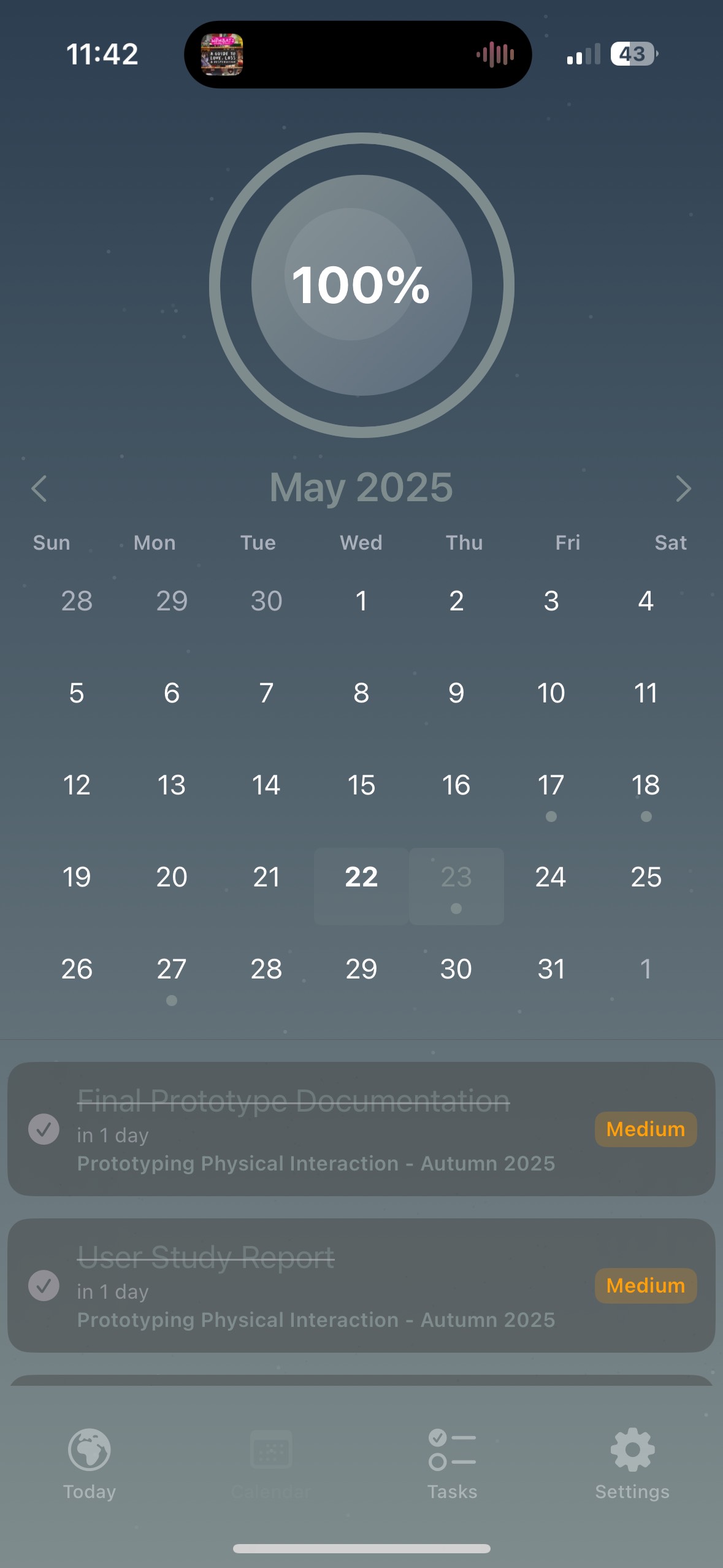
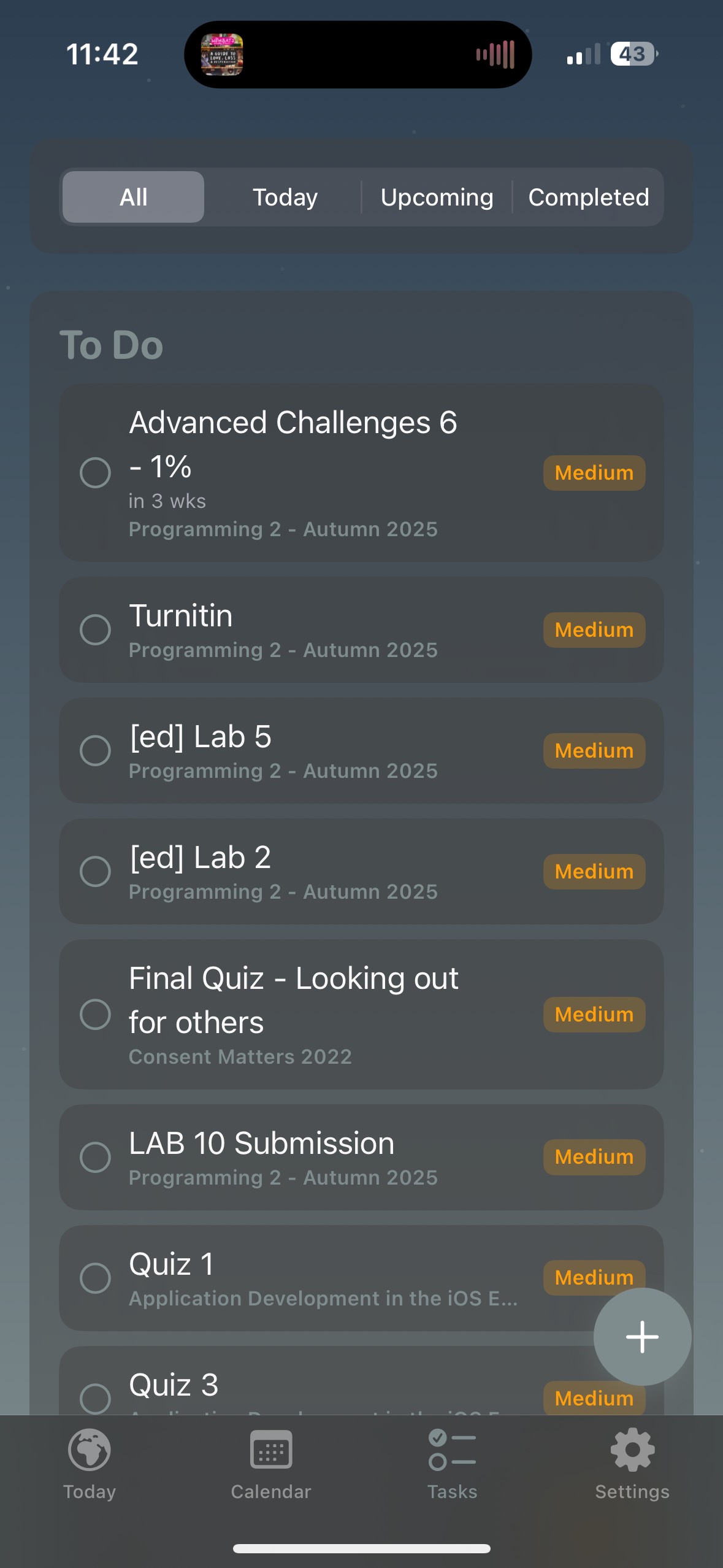
The planet theme gives the app a distinct visual identity, but the functional hierarchy stays conventional: upcoming work first, dates attached to the relevant item and detail available on demand.
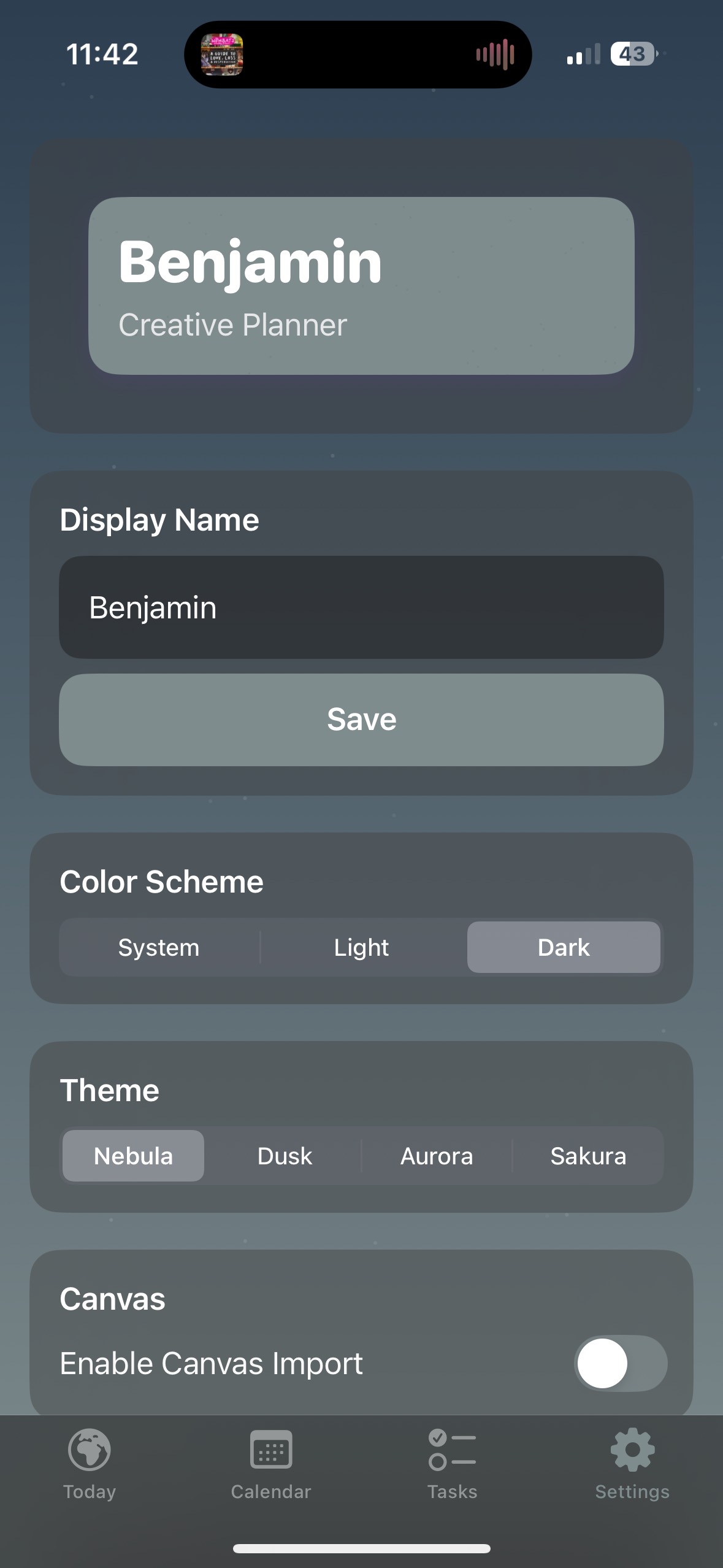
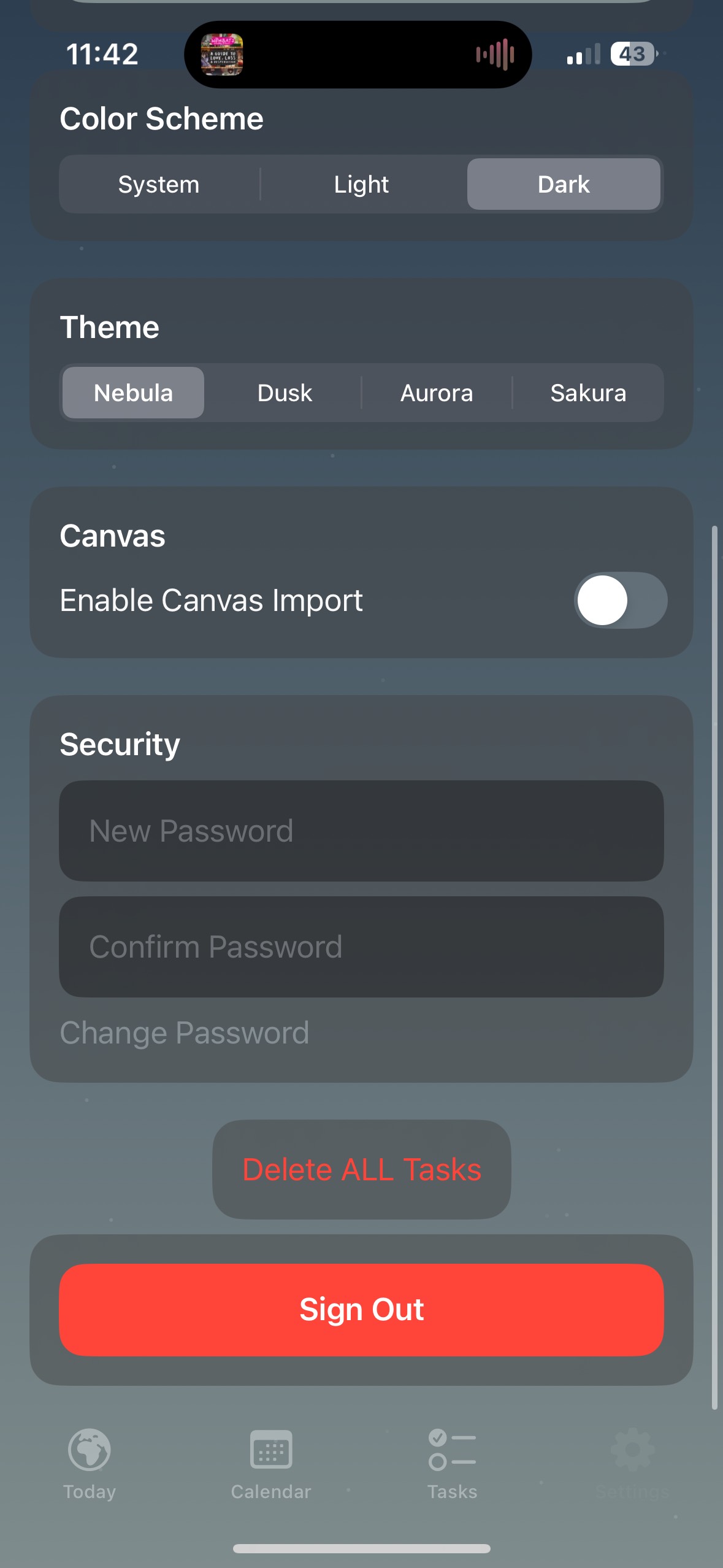
The four interface views explore overview, calendar and task-detail states. Together they show how imported and manually created work can sit inside a consistent mobile experience.
04 / Implementation
Translate an education API into a useful product.
The key implementation work was not merely retrieving records. Canvas data had to be interpreted and mapped into the app's own task model, while local entries needed persistence and equivalent display behaviour.
This required decisions about identifiers, dates, optional fields and what information was important enough to expose in a small-screen interface.
05 / Outcome and learning
A functioning concept with a clear systems boundary.
PlanIt demonstrates the complete product direction: API-sourced assessments, manual task management, local persistence and a native mobile interface. It is presented as a project build rather than a production service; no adoption or retention metric was collected.
The quality of the product depends on transforming external records into a model that matches the user's decisions.